

Introduction
At a time when sustainability and circularity are becoming increasingly important, the work environment plays a crucial role in achieving these goals. During the webinar organized by Alvero and Smart Workplace, the importance of data for the circular transition of the work environment was discussed in depth. This paper summarizes the key points and insights, with a special focus on real-world examples and strategies that were discussed.
The importance of CSRD and the role of data
Jeff van Eijk, sustainability consultant at Sustainall, highlighted the new guidelines around sustainability, such as the Corporate Sustainability Reporting Directive (CSRD), and how they are forcing companies to be more transparent about their sustainability efforts. Important is the role of data in demonstrating impact and driving improvements. Data on the use and reuse of office furniture is becoming crucial in reporting and improving sustainability performance.

Practice example: Circular revitalization at Alpha College
Hans Reineke, architect at Holland New, shared a real-life example of circular revitalization at Alpha College. This project demonstrated how essential it is to integrate a circular approach from the beginning of a project and how data on existing materials and furniture are indispensable for this.

The Practical Application of Furniture Management Systems
Brigitte de Haan, housing manager at Senzer, illustrated how a furniture management system works in practice and contributes to a circular work environment. By understanding the lifespan, condition and potential for reuse of furniture, organizations can make more sustainable decisions and more efficiently manage what they already have.


Conclusion and Action Call
The transition to a circular work environment is both a necessity and an opportunity. Data plays an indispensable role in this, from meeting reporting requirements to making informed decisions about purchasing, maintaining, and reusing furniture. This requires a shift in thinking and doing by all stakeholders, from suppliers to end users.
Want to watch the webinar in its entirety? Watch it below
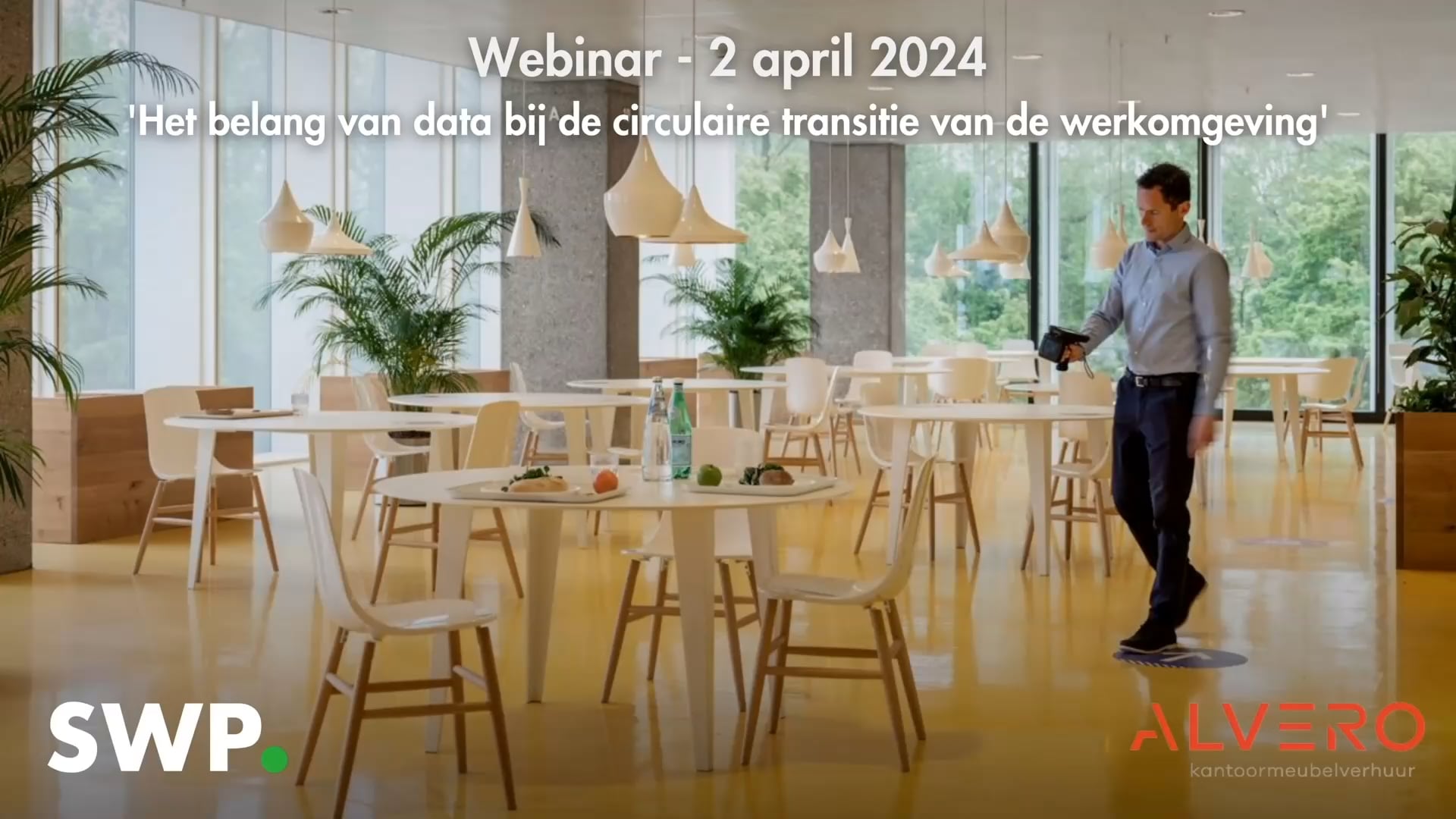
For organizations looking to accelerate this transition, Alvero Furniture Management offers a platform and the expertise to optimize the deployment and management of office furniture. Discover how to transform your work environment in a way that is both economically and environmentally sustainable.
Circularity starts with knowing what you already have
The most important lesson from the webinar of April 9, 2024 is actually surprisingly simple. Before you can determine what you need, you must know what you already have.
With insight into inventory, condition, and usage, it becomes easier to extend the lifespan of furniture, plan maintenance, and avoid new purchases. Data does not make circularity more complicated. On the contrary, it makes it feasible.
Frequently Asked Questions
What is a circular work environment?
A circular work environment is designed with the goal of keeping products and materials in use for as long as possible. For office furniture, this means, among other things, maintaining, repairing, repurposing, and only replacing it when necessary.
Why is data important for circularity?
Without insight into the inventory, it is difficult to steer towards targeted reuse. Data helps to see where furniture is located, what its condition is, and which products can be reused.
What is a furniture management system?
A furniture management system records information about office inventory, such as location, condition, maintenance, and lifespan. This allows organizations to manage their furniture more efficiently and better organize reuse.
Do you have to replace all furniture for a circular design?
No. Quite the opposite. A good first step is to investigate which existing furniture can still be used, maintained, or refurbished.
How do you start with a circular work environment?
Start by taking inventory of what is already present. Next, map out the condition, location, and possibilities for reuse. Based on that, you can determine what needs to be retained, maintained, moved, or supplemented.
Can I still watch the webinar from April 9, 2024?
Yes. The full recording of the webinar is available on this page.
Would you also like a demo?
Contact Joris for more information and start your circular transition today.
